Buy Kanjivaram Silk Sarees Online
Kanjivaram silk woven in and around Kanchipuram, with korvai borders interlocked at the loom and heavier mulberry silk. Every price shown includes GST.
Loading products
More Kanjivaram Silk Saree pieces from our artisans are on the way
This section is still being stocked by our artisan partners. Browse the full shop meanwhile, or tell us what you are looking for and we will source it.
About Kanjivaram Silk Sarees
A Kanjivaram silk saree takes its name from Kanchipuram, the historic weaving centre in Tamil Nadu where the tradition developed. It is woven from substantial mulberry silk, giving the finished saree a firm hand, a rich drape and the weight associated with ceremonial South Indian silk. Its identity comes from construction rather than decoration added after weaving.
The defining feature is korvai. The body, contrast border and pallu are prepared on separate warps and interlocked by hand at the loom. This creates a precise colour break and a durable join that can be seen and felt when the saree is turned over. Traditional motifs are woven into this structure. Mayilkan represents the peacock eye, rudraksha recalls the prayer bead and annapakshi depicts a mythical swan. Temple borders, checks and broad contrast pallus belong to the same visual language. These elements are woven, not printed or surface embroidered.
Kanjivaram has a place in weddings, muhurtham ceremonies and important family occasions because the dense silk and structured pallu hold their form. The same tradition also includes quieter checks, restrained borders and lighter visual treatments, although a full korvai weave remains distinct from generic soft silk.
KalaHubIndia is currently onboarding Kanjivaram inventory from weaving partners. When a piece is live, its product page names the seller or weaver partner behind the listing and records the stated material and construction details. Until qualifying pieces are available, this page remains an honest craft reference rather than displaying unrelated silk sarees. Buyers can use the checks below to examine a listing before purchase and inspect the weave when it arrives. Prices on live listings include GST.
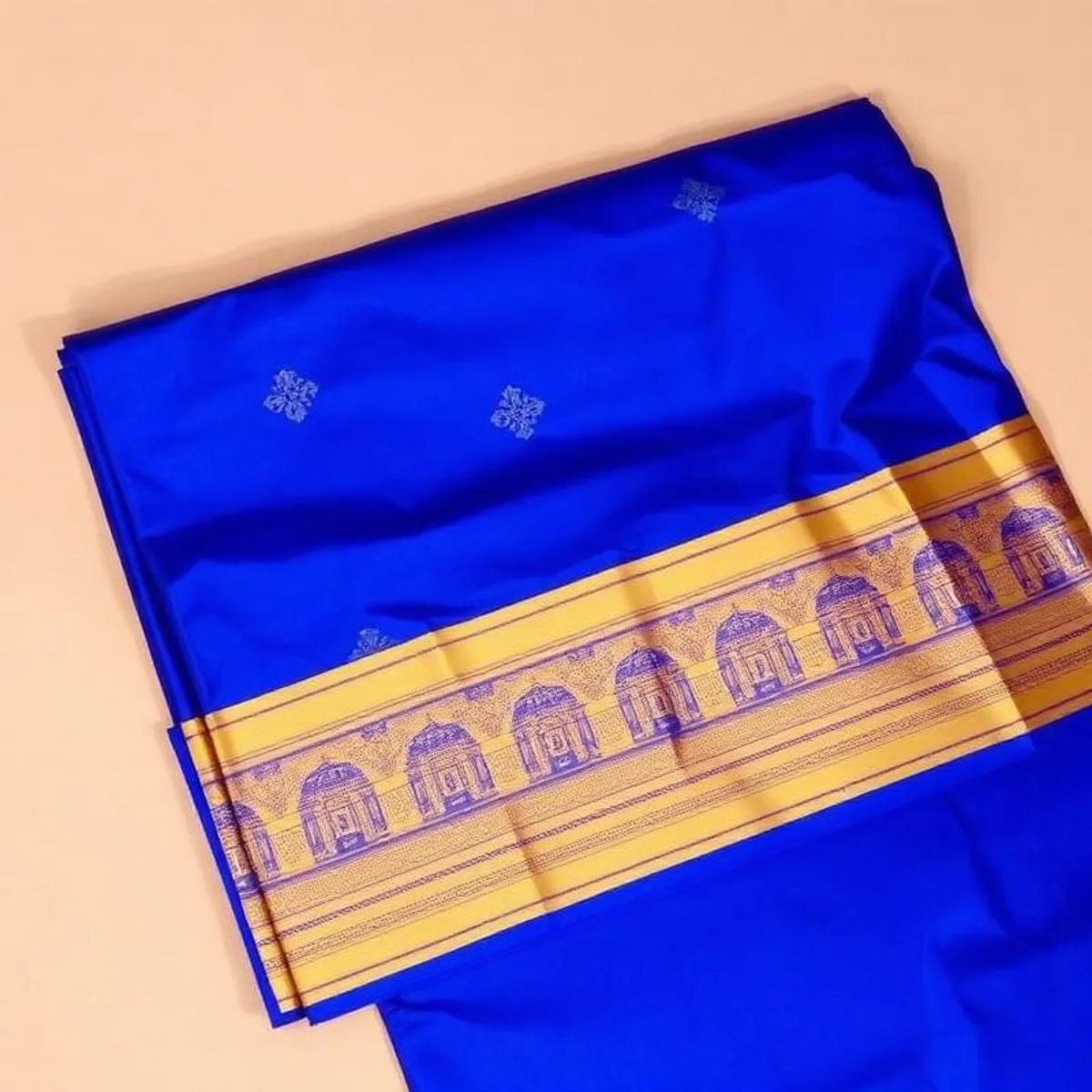
What Makes a Kanjivaram Different: The Korvai Join
Korvai is a structural joining method. The saree body and its border are woven on separate warps, often in strongly contrasting colours, then interlocked by hand as weaving progresses. The pallu may also be prepared separately and joined to the body. On the reverse, the junction creates a small visible and tactile ridge rather than a flat printed transition.
This construction allows a true contrast border that a single warp weave cannot reproduce in the same way. It also helps explain the weight and firmness of a pure Kanjivaram silk saree. Because the border is integrated into the weave rather than stitched onto the edge, it is designed to remain secure through years of careful wear. A decorative seam, printed colour change or surface trim may imitate the appearance from a distance, but it is not korvai.
How to Identify a Pure Kanjivaram Silk Saree
A burn test destroys a thread and should be attempted only on a loose stray end. Pure silk smells similar to burnt hair and leaves soft, powdery ash, while synthetic fibre can smell like plastic and form a hard residue.
Every Kanjivaram listing on KalaHubIndia names the weaver partner it came from, so you can see the source before you buy and still run these checks yourself when it arrives.
Check the korvai join
Turn the saree over and look and feel for the interlocking ridge where the contrast border meets the body. A stitched or printed border is not korvai.
Examine a loose zari thread
Gently scratch only a loose zari end near the pallu. Traditional tested zari may reveal a reddish silk core beneath its metallic layers. White or copper coloured cores can indicate imitation zari, but construction details should also be checked with the seller.
Notice weight and drape
Substantial mulberry silk and dense zari give a full korvai Kanjivaram real heft. A saree that appears highly ornate but feels unusually light deserves closer examination.
Confirm motifs are woven
Mayilkan, rudraksha, annapakshi and temple motifs should form part of the weave and remain visible on the reverse rather than appearing only on the surface.
Feel the texture
Pure silk feels smooth yet firm and warms slightly when rubbed. Synthetic fibres can feel colder, excessively slippery or uniformly plastic.
Understand Silk Mark
Silk Mark is a hologram label issued by the Silk Mark Organisation of India to indicate pure silk. Buyers may see it on some sarees. It is separate from KalaHubIndia and should be verified on the individual item.
Kanjivaram Silk Sarees for Weddings and Brides
Kanjivaram silk is closely associated with South Indian wedding dress. For a muhurtham, heavier korvai weaves with a broad contrast border and a grand pallu are traditional choices because the structured silk holds pleats and remains visually defined through a long ceremony. Engagement and reception dressing may use the same construction with a quieter border or a more contemporary colour pairing.
Red and maroon carry longstanding bridal significance, while green and strongly contrasting borders are also part of South Indian wedding convention. Motif scale, zari density and pallu design change the formality more than colour alone. This cultural context does not imply that a bridal collection is currently in stock. Live bridal and wedding Kanjivaram pieces will appear in the product grid only after the relevant seller listings have been reviewed and approved.
Kanjivaram vs Banarasi vs Pattu
Kanjivaram belongs within the wider pattu family, but the terms are not interchangeable. Pattu is the broad South Indian term for silk sarees, while Kanjivaram identifies a place, a heavier silk character and the korvai method. Banarasi belongs to a different weaving tradition from Varanasi. Understanding the construction and motif vocabulary is more reliable than choosing by shine alone.
| Saree tradition | Origin and structure | Recognisable character |
|---|---|---|
| Kanjivaram | Kanchipuram, Tamil Nadu; heavier mulberry silk with korvai joins | Contrast borders, temple forms, mayilkan, rudraksha and annapakshi motifs |
| Banarasi | Varanasi, Uttar Pradesh; silk brocade | Mughal era kalga, bel and jhallar design vocabulary |
| Pattu | Broader South Indian silk family | Varied weights, temple borders and contrast pallus across several weaving centres |
Caring for a Kanjivaram Silk Saree
- Dry clean only and avoid detergent or machine washing.
- Store the saree folded in soft cotton or unbleached muslin rather than plastic.
- Refold it every few months so the zari does not crack repeatedly along one crease.
- Keep it away from direct sunlight and damp storage areas.
- Never spray perfume or deodorant directly onto the silk or zari.
- Air the saree in shade after wear before folding it away.
Kanjivaram Silk Saree FAQs
What is a Kanjivaram silk saree?
A Kanjivaram silk saree is a mulberry silk weave associated with Kanchipuram, Tamil Nadu. It is known for substantial silk, a structured drape and korvai construction that interlocks a separately woven body, border and often the pallu.
How do I identify a pure Kanjivaram silk saree?
Check the reverse for the tactile korvai ridge, confirm that motifs are woven through the fabric, examine the stated silk and zari composition and notice the saree's firm weight. A Silk Mark label, when present, is issued separately by the Silk Mark Organisation of India.
What is the korvai border?
A korvai border is woven on a separate warp from the saree body and interlocked with it by hand at the loom. The join creates a visible ridge on the reverse and allows a sharp, durable contrast border.
What is the difference between Kanjivaram and pattu?
Pattu is the broad South Indian term for silk sarees. Kanjivaram is a premium tradition within that family, associated with Kanchipuram, heavier mulberry silk and korvai construction.
Why are Kanjivaram sarees heavier than other silk sarees?
They commonly use substantial mulberry silk, dense zari and separately woven sections joined through korvai. These structural choices create more weight and firmness than many lightweight silk weaves.
How should I care for a Kanjivaram saree?
Dry clean it, air it in shade after wear and store it folded in soft cotton or muslin. Refold it every few months, protect it from damp and sunlight and keep perfume away from the silk and zari.
Related buying guides and categories
Explore all handwoven sarees
Browse the main sarees collection and compare live weaving traditions.
Understand the wider Pattu silk family
See how Kanjivaram fits within South Indian pattu traditions.
Compare Banarasi silk sarees
Compare Kanchipuram korvai with Varanasi brocade.
Learn about Kanjivaram silk
Read the material reference for silk, zari and korvai construction.